This site uses cookies for analytics and to improve your experience. By clicking Accept, you consent to our use of cookies. Learn more in our privacy policy.
How has your week been so far? Mine…cold and grey – winter is here!! 😉
Just a reminder that our weekly Vlog is all about you! It is to help English learners like you learn real, relevant and meaningful English.
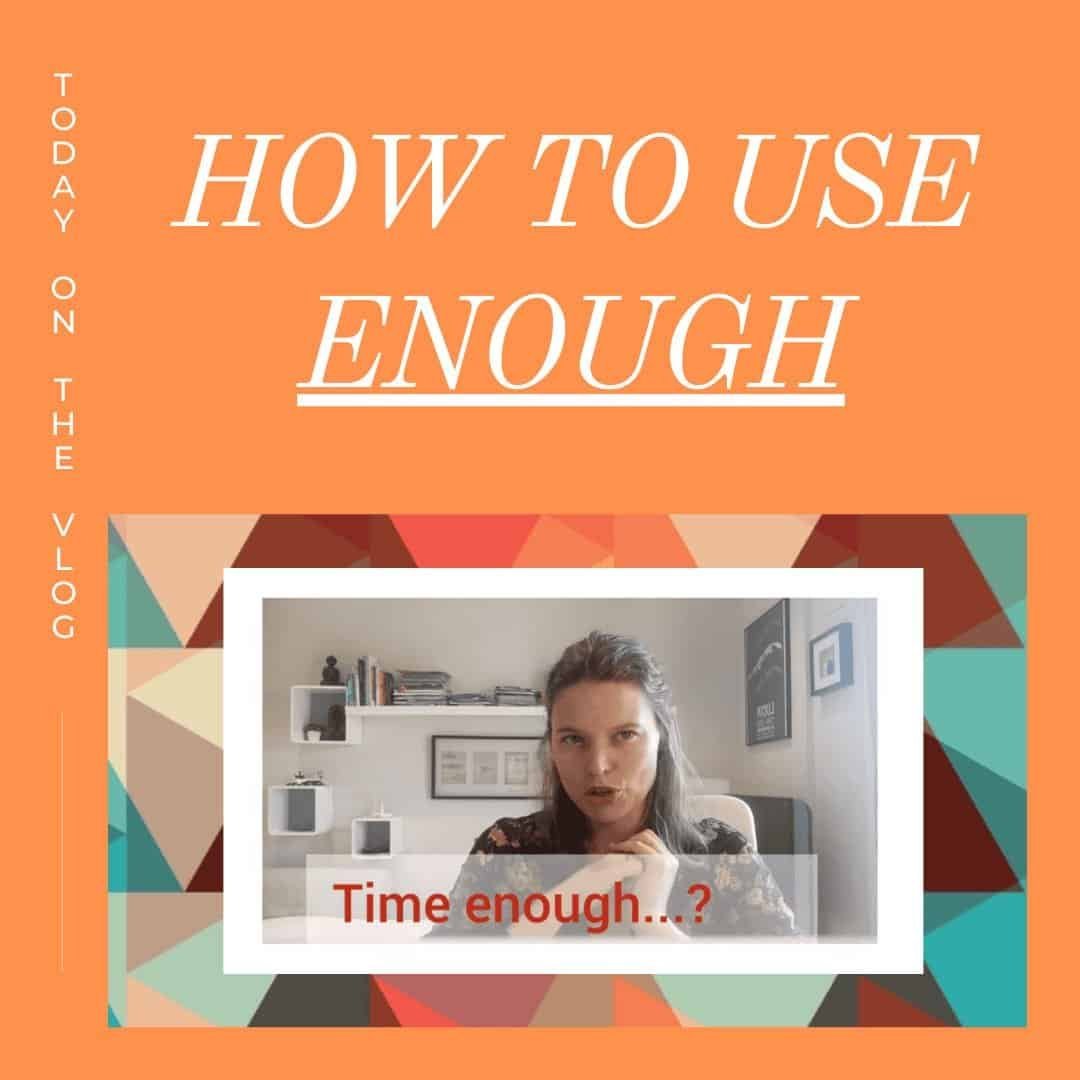
So in this week’s Roll your English VLOG, we look at the common mistake of using the word ENOUGH… What is that mistake and HOW can you fix it?
Start watching or keep on reading! 😉
Which one is correct and WHY? “I have time enough OR I have enough time?”
THE SECOND ONE! If you use enough with a NOUN, the word enough has to come BEFORE the noun: Enough + noun Enough time Enough money Enough energy
And in this case: “I am strong enough OR I am enough strong?”
THE FIRST ONE! If you use enough with an ADJECTIVE, the word enough has to come AFTER the adjective: Adjective + enough Tall enough Intelligent enough Big enough Fast enough
An extremely common mistake…with a very simple explanation! I hope I have explained this WELL ENOUGH and you have had ENOUGH TIME to read until here! 😉
Remember to check out our fun and effective Conversation Program!
Have a wonderful-wintery-week! And keep Rolling your English!
Lindri Steenkamp es la fundadora de Roll your English y creadora de The 4 Pillars Method, el sistema detrás de English For Sales. Originaria de Ciudad del Cabo, con formación en Psicología y Pedagogía, lleva más de 15 años enseñando inglés en África, Asia y Europa. Al mudarse a España vivió en primera persona lo que hoy entrena: saber el idioma y, aun así, perder la voz y la autoridad al cambiar de lengua. Desde entonces trabaja con directivos y equipos comerciales que ya tienen un buen nivel de inglés, pero que se bloquean en el momento que importa: una objeción de precio, una negociación, una pregunta que no esperaban. Su enfoque no empieza por la gramática, sino por cómo funciona la mente bajo presión.
Hoy dirige la metodología de Roll your English: diseña el sistema, selecciona a cada profesor y se asegura de que cada profesional llegue a vender en inglés con la misma autoridad que en español.
Presentaste la solución en inglés y salió bien. Hablaste ocho minutos, usaste el vocabulario que habías repasado, el cliente asintió un par de veces. Después levantó la mano: “And how…
It’s too expensive. Tres palabras. Las entiendes perfectamente. Y aun así, cuando un cliente las dice, tu cabeza se queda en blanco durante dos segundos eternos y acabas balbuceando algo…
Mi nombre es Lindri, fundadora y profesora de Roll your English.
¡Estamos muy felices de que hayas pasado por aquí! Si está buscando una forma interesante y divertida de ampliar su conocimiento del inglés, ¡deje sus datos y descargue las 20 COMMON English Expressions!
ENJOY!!
Por favor, completa tus datos para poder enviarte el libro electrónico gratuito.
¡Hola! ¡Bienvenidos!
Mi nombre es Lindri, fundadora y profesora de Roll your English.
¡Únase a mí durante 30 días mientras lo ayudamos a aprender inglés a través de tutoriales en video diarios y fáciles de seguir diseñados para MEJORAR SU INGLÉS!
DISFRUTAR!
Por favor, completa tus datos para poder enviarte el libro electrónico gratuito.